
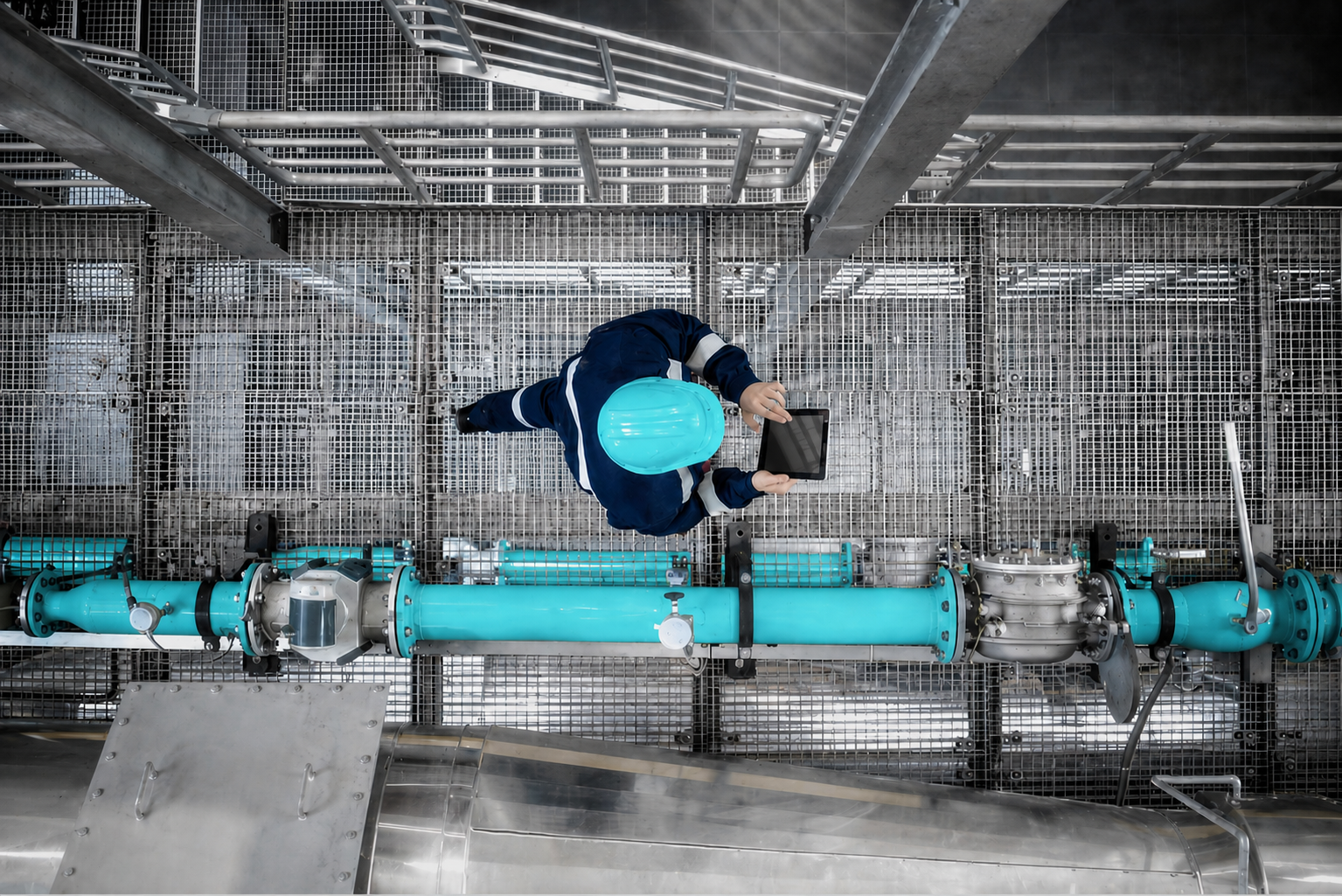
A midstream company strengthens the reliability of its AI-driven asset decisions by establishing enterprise AI governance that ensures models supporting critical infrastructure are trustworthy, monitored, and accountable.
At a glance
Success Highlights
- 30% reduction in unplanned asset downtime
- 100% of reliability models brought under formal governance
Related Services and Solutions
- AI Governance
- AI Adoption
Challenge
A midstream company had come to rely on AI models to guide decisions about the maintenance and reliability of critical infrastructure. As those models took on a bigger role in protecting pipelines and equipment, the lack of governance around them became a serious concern: a model that drifted or failed quietly could put asset reliability and safety at risk.
The gaps in oversight carried real consequences:
- Models supporting critical assets ran without consistent validation or monitoring.
- Model drift and data quality issues could go undetected until reliability suffered.
- No clear accountability existed for the decisions these models informed.
Recognizing that reliable assets depended on reliable models, the client sought to put governance around the AI guiding its most critical infrastructure.
Solution
AIHugger partnered with the client to establish enterprise AI governance focused on the models supporting asset reliability, built to fit the safety demands of midstream operations. Our approach centered on four pillars:
Model Inventory & Risk
- Built a complete inventory of the AI models supporting asset reliability.
- Tiered each model by the consequence of its decisions for safety and uptime.
- Focused the most rigorous oversight on the highest-consequence models.
Validation & Controls
- Established standards for validating models before they informed critical decisions.
- Defined data quality controls to keep model inputs trustworthy.
- Required human oversight where reliability and safety were at stake.
Monitoring & Drift Detection
- Implemented continuous monitoring of model performance in production.
- Set alerts to catch drift and degradation before they affected assets.
- Created clear procedures for responding when a model fell out of tolerance.
Accountability & Ownership
- Defined clear ownership for every model across its lifecycle.
- Established documentation and audit trails for model decisions.
- Transferred the governance practices so the organization could sustain them on its own.
By making the models behind asset decisions trustworthy and monitored, the governance framework turned AI from a quiet risk into a dependable contributor to reliability.
Outcomes
The governance framework strengthened the reliability of both the models and the assets they protected:
30% reduction in unplanned downtime: Trustworthy, well-monitored models led to better maintenance decisions and fewer unexpected asset failures.
100% of reliability models governed: Every model supporting critical assets was brought under formal validation and monitoring.
Early detection of model issues: Continuous monitoring caught drift and data problems before they could affect reliability or safety.
Clear accountability and audit trails: Defined ownership and documentation left every critical model accountable and ready for scrutiny.
By governing the AI behind its most critical infrastructure, the organization made its assets more reliable and its operations safer, setting a new standard for trustworthy AI in midstream operations.